A look at China’s struggling agricultural fortunes

I almost never start a blog post, story, column (or speech) with a quote. I got pummeled for doing so back in the 1970s by an editor at the Windsor Star, and I've never forgot.

But to me, this one bears our attention:

"The world cannot afford a failure as big as China."

That's a warning from Chinese agricultural journalist Zhou Siyu, in his fine 2012 outlook story about his country's projected agricultural fortunes, published in the China Daily.

Zhou, who visited Guelph in September as a participant in the International Federation of Agricultural Journalists congress, says China's farmers are fighting a battle on two fronts.

"They are simultaneously contending with a surge in demand stemming from the ever-increasing population, and with a decrease in the amount of arable land, water and other natural resources that can be exploited, " he says.

According to Zhou, the country's looming troubles help explain why it has imported more agricultural goods in recent years. Not until 1996 did the country begin to import soybeans. By 2010, though, China was bringing in 54.8 million tons of soybeans a year, making it the largest importer of that farm product in the world.

Here's the Canadian angle: in 2011, China surpassed Canada to become the largest importer of US agricultural goods. It's a very hungry country.  And, says Zhou, it's spending a lot of money on food, with its imports helping keep economies such as the US afloat.

That's why the world can't afford China to fail, says Zhou. Globally, who else is spending money?

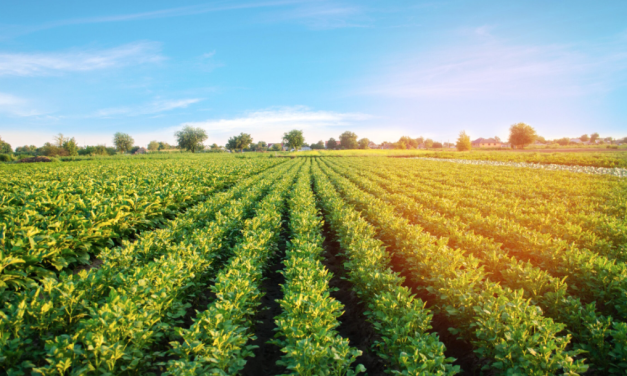
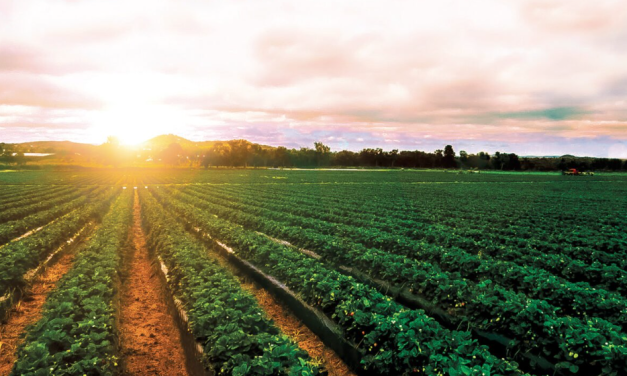
The photo in this blog post is from China Daily, of harvesting at a farm in Nantong, Jiangsu province.


Posted in General news | Tagged , , , , , , | Leave a comment

We have a lot riding on farmers’ success in 2012

I tell my University of Guelph agricultural communications students that conflict drives the news. And having touched down in 2012, it’s pretty easy to find conflict in agriculture and food. Some of it simmers in social undercurrents, in what we’ve come to accept as cultural norms. Other examples of conflict have indeed surfaced, but seem just as chronic.

We waste a lot of food.

Take the fact that while hundreds of thousands of people go to bed hungry, North American society has become quite comfortable throwing out food. Guelph’s George Morris Centre estimates we throw away 40 per cent of our food every year, worth about $27 billion.

Conflict also exists in the fact we are one of the world’s most affluent societies, yet in Ontario, 400,000 people use food banks. The Ontario Association of Food Banks delivers more than eight million pounds of food to food banks and their hunger relief programs across the province, including breakfast clubs, school meal programs, soup and community kitchens, emergency shelters, seniors’ centres and youth groups across Ontario. It’s become a huge social network.

And there’s conflict in the fact that even though we’re better educated than ever, we’re putting untold pressure on our health-care system by making poor food choices. Nova Scotia has predicted that without change, in 10 to 15 years health care will consume 100 per cent of its provincial program spending budget. Other provinces feel similar pressure.

None of this conflict is the agriculture sector’s fault. But interestingly, people still look to it for answers. They’ve embraced Hippocrates’ advice: let food be thy medicine.

And perhaps that would be more likely if people gravitated towards healthier food choices in the same way they’ve embraced local food. A new Bank of Montreal consumer poll showed 94 per cent of Canadians believe it is important to support local farmers and buy local on a regular basis. Respondents said when they go for local food, 70 per cent or more choose poultry and vegetables first, followed by beef, fruit and cheese.

To me, those sound like pretty healthy choices.

Of course, the way food is prepared has a lot to do with its impact on health. But at least the raw commodities have the potential to get people off to a good start.

More hopeful signs are on the horizon. John Kelly, vice-president of the Erie Innovation and Commercializationin farmland-rich Norfolk County, says southern Ontario’s large population is expanding its preferences for local food. Some companies in food service and

retail are focusing on local food as a merchandising strategy. He believes demand is clearly on the rise, as is the opportunity for increased supply of primary and processed food products from the region.

If we want access to local food, farmers need to be profitable. For a long time, pork producers in particular were suffering. The Canadian government even had a program to help them get out of pig farming. But that’s turning around, thanks in part to research and genetics.

Jim Long, president of purebred pork breeding giant Genesus Inc., says the best farmers are cutting their costs and increasing their profitability by investing in pigs that produce bigger litters. Incredibly, he says, he’s seen customers jump four pigs per sow per year by changing genetics. To the public, this will look like business as usual. To farmers, the difference is huge.

In 2012, farmers will continue working through conflicts with weather, prices, politics and everything else that makes food production challenging and fascinating. Let’s wish them a Happy New Year. A lot is riding on their success.

This column appeared in the Guelph Mercury January 2, 2012. The photo here is from planetgreen.discovery.com.


Posted in Guelph Mercury | Tagged , , , , , , , , , , , | Leave a comment

Women need mentors for farm leadership roles

Farmers where I grew up, near Wallaceburg in southwestern Ontario, had at least one common trait. They proudly proclaimed their name and their male heir on the sides of their barns.

A half-century ago, I guess it was a sign of the times. For example, my uncle, who called his farm Ambitious Acres, had the barn painters stencil in “Don Cadotte and son,” the son being my cousin Greg.

It's hard to read the name on the side of this barn, near Stouffville.

Indeed, Greg was his only son. But Uncle Don and his tireless wife Marie also had five very capable daughters, namely my other cousins Donna, Angela, Connie, Cathy and Michelle.

When it came to the barn, what about them?

Well, it turns out someone else from Wallaceburg, one of my oldest friends, Prof. Lonnie Aarssen, has come up with at least a partial answer. Aarssen, a biologist at Queen’s University, says my uncle and others like him were given to show off what Austin Powers would call his Mini Me – that is, a biological copy of himself.

“We’re aware of our mortality,” says Aarssen, “and having copies of ourselves is a mortality buffer.”

Aarssen and his research team asked almost 2,400 Queen’s students what gender of baby they would prefer first. Traditionally, in southwestern Ontario culture, boys were mentioned first. In the farm sense, they were not only heirs, but also as built-in farm labourers and schoolyard watchdogs for little sisters to come.

Aarssen anticipated traditional boy-first patterns. And he did, to an extent – 65 per cent of boys in the study said they want a boy first.

But the surprise came when more half of the women respondents said they wanted a girl, not a boy — a female version of Mini Me.

I’d love to see this survey applied specifically to modern farms. It’s still important that labourers be hale and hearty, but as mechanization continues to advance, a strong back isn’t all that counts anymore. That’s especially true when it comes to farm management, such as choosing crop protection, borrowing money and hiring labour, which is becoming increasingly fine tuned. It’s not a male domain.

Women say they need mentors to assume leadership positions in agriculture. I write about this in my Urban Cowboy column this week in the Guelph Mercury.

Posted in Guelph Mercury | Tagged , , , | 2 Comments