Thanks for visiting www.urbancowboy.ca!
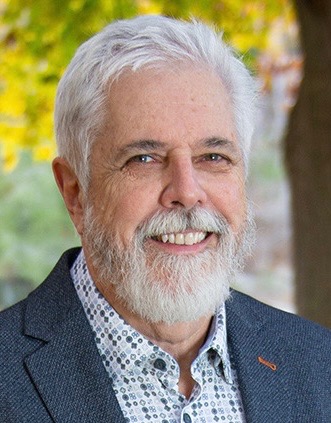
Since 1995, I’ve taught agricultural communications at the Ontario Agricultural College. I’ve held the position of director of research communications at the University of Guelph for 26 years, where I started a program called Students Promoting Awareness of Research Knowledge (SPARK).
I’ve been fortunate to lead programs that have won awards or been recognized by the Ontario Agri-Food Innovation Awards, the Canadian Council for the Advancement of Education, the Association for Communications Excellence and the Canadian Farm Writers’ Federation. It’s a tribute to the hard work and dedication SPARK students and research communications staff have shown over the years, to the cooperation we’ve had from University of Guelph faculty and administration, and to the commitment from sponsors.
After graduating from the University of Windsor with a communications degree, my journalism and communications career began as a reporter and editor in Ontario, at the Wallaceburg Courier Press, and then in Alberta, at the Grand Centre-Cold Lake Sun and the now-defunct Alberta Report magazine. Professors, editors and publishers such as the late Andy Osler, Gary O’Flynn, Peter Longmore, Jim Bentein, Link Byfield and Ted Byfield had a lot of patience with me as I was learning the profession, and I owe my students the same consideration.
Today, besides teaching and administrative work at the University of Guelph, I am active as a journalist, most notably as the agri-food columnist — the “Urban Cowboy” (i.e. an urban person who writes about the farm sector) — for the Guelph Mercury.
I also contribute to various other regional and national agri-food publications, including The Grower, RealAgriculture and Farm Credit Canada’s FCC Express e-newsletter.
I’m a native of Mitchell’s Bay, Ontario, a bay and small village on Lake St. Clair, about halfway between Wallaceburg and Chatham. I hold a Bachelor of Arts (communications) from the University of Windsor, a Masters of Science (rural extension studies) from the University of Guelph, and a Doctorate of Education (agricultural education) from Texas Tech University and Texas A&M University.
In 2005, I was named an honourary professional agrologist by the Ontario Institute of Agrologists. In 2008, I was elected Secretary General of the International Federation of Agricultural Journalists; in August, 2012, I was elected Vice-President. I also received the academic programs award of excellence from ACE in 2012, as well as having a peer-reviewed journal article I co-wrote with colleagues named Article of the Year by the Journal of Applied Communications.


Hi Owen!
How are you doing? Looks like AMS was a good time! Nice blog site. Very interesting reading.
Do you have any students/alum who are interested in a bit of contract web design work? I am looking for a bit if help to get me through the pile-up of web stuff I have so I’ll be ready for catalogues to start next month.
They can e-mail me at laura@lmbcommunications.com.
Thanks,
Laura
[...] Roberts over at Urban Cowboy spent an hour in a room with Iowa State journalism professor Michael Bugeja recently. Bugeja was [...]
Hi Owen,
Just ‘found’ your blog. Would you care to trade links? Blog Guelph is pretty active.
Sue
Owen,
I’ve nothing but admiration to you for engaging in science communication. I author the blog GMO Africa (http://www.gmoafrica.org/), which tries to create awareness about genetic engineering. This issue has been distorted by self-seekers. Scientists’ voices have been drowned. It’s very encouraging that a scientist like you has come out to defend other scientists and their work. Please continue with this good work. Consider adding my blog to your blogroll. I will do the same for your blog.
Thanks
James
Thanks Owen, for the article that appeared in the Woolwich Observer on Ice cream and Palm oil. That was an eye opener for us, and we are pretty smart shoppers/healthy eating aficianodos. I grow lots of veggies in my backyard and we do a fair amount of canning as well. Love that healthy food. So kudos to Chapmans, we will only be buying their ice cream from now on.
Steve and Cathy Morris
St. Jacobs, Ont.
G’day Owen, It’s probably 10 years now since we met on the IFAJ tour to Australia. At the time I was working with the Rural Press Weekly (Stock & Land) in what I thought was a stop-gap posting on my way to another journalistic field and here I am now, a freelance agricultural journalist with 8 years of ag papers under my belt. I stumbled across your blog and would like to get in touch to pick your brain about ag journalism.
Great work with the site,
Stephen Cooke
BTW, my address is stephen@standtallmedia.com.au
Hi Stephen, glad to be able to make contact with you again. I’d be glad to have a talk about agricultural communications. Where would you like to start?
Owen
Thank you for linking to my website.
I look forward to enjoying your blog.
Warmly,
Karen
What an interesting blog you have! I specifically liked the entry about raw milk… oh the never ending debate. Have you heard about the Schmidt case?
Wayyy over here at Alberta Milk we’re looking into developing a social media presence- both you and your students’ blogs were very helpful.
Let’s keep in touch: kstevens@albertamilk.com
Cheers,
Karlee Stevens
Thanks for your kind words, Karlee. I’m glad our efforts were helpful as you delve into social media.
I have indeed heard of the Schmidt case. I’ve followed it with great interest. In fact, I’ll be doing a CBC Commentary next week about the issue, on the Canadian Farm Business Management Council website. Have you seen this site? It’s at http://www.farmcentre.com/Home.aspx.
Good luck with your social media ventures, and let me know if I can offer any advice.
Best regards,
Owen
Owen, your blog is an interesting read, especially the articles related to Belgium.
We represent a chemical technology new to North America but initially commercialized in Belgium. It’s stabilized hydrogen peroxide. Now many farmers already know the benefits of hydrogen peroxide, including the zero footprint it has on the environment but the use of peroxide has been limited as a disinfectant due to it overeactivity, limiting its efficasy, generally making it a poor sanitizer. Our peroxide is stabilized by a minute amount of silver, it makes the peroxide much much more effective.
We are wanting to educate and then further commercialize this amazing technology here in Canada and would like to talk with you. Please drop me a line when you get a chance.
Jim Shubat
Hello Owen,
How are you? I’m very happy to read your blog. I hope you remember me, an exchange student from Fiji at University of Guelph in 2001. Now i live in New Zealand and currently completing my PhD thesis from AUT University. My topic is: Enhancing the linkages between tourism and agriculture sectors in South Pacific SIDS: a case of Niue. I was wondering if you would be happy to be an examiner for my thesis? I will be submitting my thesis next month and if you are ok to be one of my examiners, then please let me know and i will suggest your name to my supervisor.
I really hope to hear from you. I emailed you a few times but i didn’t get a reply so maybe i’m thinking that you didn’t get them.
God bless and cheers,
My pleasure to hear your blog.
Evangeline
Hi:
We are the Canadian distributors for Chelsea Green books. I’m interested in sending review copies to you. Please send me your email to confirm your interest and address. Cheers, Sarah
IN REPLY TO YOUR ARTICLE ABOUT
Ontario farmers could do with less red tape
The reason that the rural sector of Ontario has diminishing power is simply because of the system of governance under the parliamentary system.
There is no bicameralism in our parliamentary system of government in our provinces that ensure against “tyranny by the majority.”
Think about it, most of the governing seats in Ontario are concentrated around the GTA. Very few seats, in comparison, come from rural or even semi-rural communities. Therefore, someone like premier McGuinty in Ontario, can simply concentrate his focus on satisfying an electorate that is oblivious to the needs of rural communities.
However, if Ontario were to adopt a regionally equal and elected provincial upper chamber to check the power of the provincial parliament, rural communities would have more power and voice. It would be difficult to implement an elected provincial upper chamber of say 15 geographically equal districts but it is worthwhile to try because the alternative is a rural section of the province that desires complete separation from other parts of the province.
Robert Perri
1462 County Road 10
Cavan, Ontario, Canada
L0A 1C0
Could you watch Tsunami DVD?