Archive for the 'Guelph Mercury' Category

In Flanders’ fields, farmers still dodge bombs

Owen Roberts May 3rd, 2010

Ontario grain farmers are finally getting a break. They’ve enjoyed a terrific spring, with the warm, sunny weather allowing them to plant almost all their corn unusually early. Soybeans are following nicely along. And if they get some well-timed rain, officials are predicting big boosts in yield.

Planting season in Ontario is usually a game of chance with the weather. Sometimes you win, like this year, and sometimes you don’t, like last spring which was wet, cold and miserable. Indeed, it can get downright uncomfortable. But you’d seldom call planting unsafe.

However, it’s different elsewhere. Take Passchendaele, for example, in northern Belgium, site of this year’s International Federation of Agricultural Journalists’ congress, in which I participated last month. More than 90 years ago, Passchendaele was one of the major battlegrounds of the First World War. There, as in the rest of what’s called the Westhoek, the western part of West Flanders, planting season still means being on the lookout for the most grave of pests: Long-forgotten bombs.

I write about the way Belgian farmer Luk Delva (pictured below, with a bomb he found while planting this spring) and others deal with the ever-present menace in my Urban Cowboy column in today’s Guelph Mercury.

Thanks to Karen Simon, president of the American Agricultural Editors Association, for the superb photo.

This biotech cradle is ready to rock

Owen Roberts April 26th, 2010

Europeans aren’t big fans of biotechnology. They never embraced it the way North America did. And despite about 20 years of apparently safe production and consumption here, some people still aren’t convinced.

But don’t tell that to the good people of Ghent. Ghent is popularly called Europe’s Cradle of Biotechnology. Tucked away in north Belgium, it’s distinguished by numerous biotechnology initiatives including the Institute for Agriculture and Fisheries Research, a Flemish scientific institute.

Last week, a small army of scientists from the institute were more than happy to crawl out of bed on a sunny Sunday morning, and come into work to enthusiastically explain their biotechnology-based feed-the-world activities to a group of 120 agricultural journalists from around the world. I was among them, visiting as part of the International Federation of Agricultural Journalists annual congress, held this year in Belgium (and next year in Canada, in Guelph and Niagara Falls, in September).

I write about the encounter with the Belgian scientists in my Urban Cowboy column in today’s Guelph Mercury.

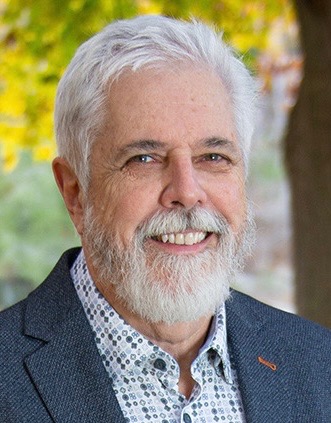
Below, I’m pictured interviewing plant scientist Dr. Mark De Loose (that’s water he’s drinking) at the institute in Ghent. Thanks to IFAJ 2010 organizers for the photo.

Innovation cluster could be Guelph’s future

Owen Roberts April 19th, 2010

Guelph’s already a national leader in agri-food innovation, but it’s only skimmed the surface, according to a new report commissioned by the city, the University of Guelph, the Guelph Partnership for Innovation, the chamber of commerce and Conestoga College. I cover the report’s recommendations, which include harnessing Guelph’s intellectual capital, in my Urban Cowboy column in today’s Guelph Mercury.

Some cluster models exist, such as the biotechnology innovation cluster that’s developed around Ghent University in Belgium, which I toured yesterday as part of the International Federation of Agricultural Journalistsannual congress.  Federation president Mike Wilson took the photo below of an artistic fruit and vegetable display at a nearby exhibition.

Farmers need to explain what they mean by sustainability

Owen Roberts April 12th, 2010

Farmers on both sides of the Canada-US border have chosen sustainability as a rallying cry. It’s a familiar term to the urban politicians and others they’re trying to influence. I think most people associate the term with environmental sustainability, though, and farmers will have to work hard to explain that their definition includes economic viability. Sustainability doesn’t pack up into a tight 30-second elevator speech the way their last slogan, Farmers Feed Cities, did. I cover the Ontario Agriculture Sustainability Coalition-led  campaign in my Urban Cowboy column in today’s Guelph Mercury.

Milk debate is about safety, not choice

Owen Roberts April 5th, 2010

I’m dedicating this edition of my Urban Cowboy column to the raw milk debate, which I believe is about safety, not choice.  Despite years and reams of evidence that pasteurized milk is safer, states that should know better, such as Wisconsin (America’s self-declared dairyland) are considering legislation to legalize raw milk sales. That’s unbelievable. Read my column here in the Guelph Mercury.

In the column, I also bring in the safety of sushi, and note an Ontario law that was created to ensure restaurants freeze sushi first to kill parasites.  It turns out that law was short-lived.

The graphic below is from e.coli blog.

Fun is key to direct farm marketing success

Owen Roberts March 29th, 2010

I was fortunate to participate last week in Farm Credit Canada‘s Marketing Caravan stopover in Guelph, hosted by Ontario Farm Fresh Association and supported by the Ontario Ministry of Agriculture, Food and Rural Affairs. The program emphasized direct marketing, and underlined how producers need to make farm experiences fun by offering features such as corn mazes (the Buy Local! Buy Fresh! maze pictured below is near Thamesville, Ontario, and comes from the “Corn Maize” website). I write about what I learned during the caravan’s visit in my Urban Cowboy column in today’s Guelph Mercury.

You can find information about Guelph-Wellington local food promotions here.

Canada’s new advantage in agri-food is traceability

Owen Roberts March 22nd, 2010

Quality, reliability and safety are traditionally the key selling points abroad for Canadian farm commodities and food products. The pristine, clean and green image resonates with buyers, and it’s helped boost Canada’s agricultural exports more than six per cent during each of the new millennium’s first eight years.  But with international food standards reaching new highs, and people everywhere asking tough questions about food, change is in the air. Craig Bremner, the Guelph-based vice-president of agriculture for TD Canada Trust, says Canada must start focusing on another trait that can set it aside from competitors — that is, traceability. I cover his perspective, and others, in my Urban Cowboy column in today’s Guelph Mercury.

It turns out today, March 22, is also World Water Day. Traceability may be Canada’s new agri-food advantage, but water is a natural advantage whose importance is only starting to be realized. Below is Canada’s most famous water feature, Niagara Falls, being viewed from the Maid of the Mist, which delegates to the 2011 International Federation of Agricultural Journalists congress will have a chance to experience. The photo is from Planetware.

Skills training vital for economic recovery

Owen Roberts March 15th, 2010

We expect modern farmers to be “green” engineers, bio-power specialists and local food marketers, among many other things. And that being the case, farmers need skills training, just like other professionals. The Canadian Agricultural Human Resources Council came to Guelph last week for a regional meeting and heard some local opinions about the kind of skills required in farming, especially as knowledge  rapidly advances and the entire country looks to farming and food processing to lead it out of the economic doldrums. The council also heard about the critical labour shortage in agriculture. I cover its visit in my Urban Cowboy column today in the Guelph Mercury.

The photo below is from the council’s website.

Healthy frogs make lousy headlines

Owen Roberts March 8th, 2010

Research from California about atrazine, a popular herbicide used extensively in corn in North America, drew headlines last week because of the chemical’s apparent effect on frogs — the researcher claimed that it changed the gender of many of the animals in his experiment. Critics were skeptical because the researcher has made claims against atrazine before, but no one has been able to substantiate them. I write about this controversy in my Urban Cowboy column in the Guelph Mercury, and I underline the need for research to try to replicate the California study. That way, the farm sector can either make adjustments to its crop protection program, or get on with feeding the world.

I’m also hoping the media will be as interested in the story if and when the California study is disproved, although I doubt that it will, because healthy frogs (or healthy anything, for that matter) make lousy headlines.

The photo below is the North American bullfrog, photographed in B.C. by Don MacKinnon/Sterling News.

The column in the Mercury is now off line; here’s what it said:

Healthy frogs make lousy headlines

It’s hard to resist a story about a popular and time-tested farm chemical that, in a laboratory experiment, is said to have made some boy frogs impotent and turned the rest into girl frogs that only produced boy frogs.

It’s weird enough to make your head spin. But even if it sounds like science fiction, the media can’t ignore the story when it breaks, especially if it first appears in an academic publication.

That’s what happened last week in California. There, university researcher Tyrone Hayes set North America on its ear with news that he’d “chemically castrated” frogs by exposing them to the herbicide atrazine.

He says that exposure either made male frogs ho-hum about sex, or turned them into girls whose subsequent offspring were all male.

Very bizarre. And stranger yet when you consider in North America, atrazine is extremely popularly for weed control in corn. Proponents like calling it the most tested herbicide ever, and point to 50 years of use, and 800-plus research studies and reviews (as recent as 2007 in Canada), that have failed to show atrazine is harmful to humans or wildlife.  It’s unpopular in Europe, but even the Food and Agriculture Organization of the United Nations says it’s not a problem.

So what’s up with this study?

Well, it seems researcher Hayes is what’s up. Fox News, never the shrinking violet, calls Hayes a junk scientist, an environmentalist who is aligned with anti-corporate thinking. He has a thing about atrazine. He’s gone after it before and made some harsh claims, but no other scientists could reproduce his results.

And that’s the key. The measuring stick for establishing scientific proof is whether the research can be replicated. Can other researchers get similar results if they follow the exact same procedures?

And if they can’t, will media be as attentive? Not likely. Healthy frogs make lousy headlines, and that’s not a disparaging comment on the media. They just do.

But expect to see anti-corporatism put forward as research,  as the ag sector tries to figure out ways to feed an increasingly hungry world.  It’s clearer all the time that farmers will need to grow more crops and raise more livestock on less land. Just last week, U.S. federal agriculture secretary Tom Vilsack announced Washington was  pursuing a land conservation policy that could reduce U.S. cropland by 1.5 per cent.

Vilsack’s plan is to take marginal or fragile land out of production, which is laudable. Usually such land is not particularly productive anyway, which helped make it agriculturally marginal in the first place. Or, if it is productive, it comes at an unacceptable environmental cost. Maybe it’s been found to house sensitive flora or fauna. Or maybe it’s too close to waterways. Dozens of reasons could exist for it being labelled marginal or fragile.

But to some extent, it also feeds people. It’s estimated the U.S. farmland that might be removed from production, some five million acres, could produce more than 150 million bushels of wheat, 200 million bushels of soybeans or 700 million bushels of corn.

If society supports activities such as marginal land preservation, it must give farmers an alternative. To produce more food with less land, farmers need access to safe technologies, including biotechnology, without running into unnecessary roadblocks. Politically, every time marginal land is set aside, farmers should stand up and applaud decision makers for being environmentally aware. But simultaneously, farmers should remind decision makers of their responsibility to ensure tools, technology and policies are in place to feed the world.

Atrazine is a tool and a technology. Does it make frogs go haywire? Good, replicated studies of Hayes’s research are needed to determine if indeed atrazine is the kind of problem he says it is. If so, make adjustments. If not, let’s get on with feeding the world.

-30-

Ontario deserves the gold for agri-food research

Owen Roberts March 1st, 2010

If they awarded medals for best supporting role by a Canadian province in agri-food research, Ontario would win the gold, hands down. Despite tough economic times, Ontario continues investing in the sector that feeds us, provides recreation opportunities, keeps the environment healthy, and garners as much respect as medical professionals and emergency response personnel. The biggest commitment — about $75 million a year — is to the University of Guelph, from the Ontario Ministry of Agriculture, Food and Rural Affairs. But other provincial ministries invest in agri-food research at Guelph, as well. I cover the latest investment in my Urban Cowboy column is today’s Guelph Mercury.

Speaking of gold medals, how about Sidney Crosby?

« Prev - Next »