Archive for February, 2009

Jack Wilkinson: Help solve the crisis of immorality

Owen Roberts February 23rd, 2009

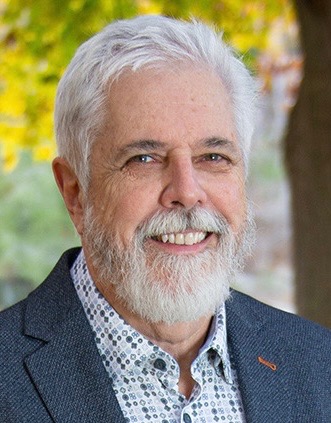
jack-wilkinson

(photo by Grant Martin)

Without sounding too simplistic, some would lay the economic problems we’re having at the feet of immorality.

Society got too greedy — we overconsumed in many ways, and the chickens have come home to roost. That means astounding job losses, bailouts in the trillions and a general malaise that most of us have never experienced.

And while the enormity of the matter is overwhelming, there’s one aspect that can be changed pronto — that is, business ethics.

Canadian farm leader Jack Wilkinson (pictured above), who received an honorary doctor of laws degree from the University of Guelph last week, told the convocating class for the College of Management and Economics that they and other graduates have a unique opportunity to instil a new morality into the businesses, industries and organizations they join or start.

Wilkinson says rebuilding will include new corporate ethics. They’ll be based significantly on equality. Chief executives won’t be making millions at the expense of shop floor workers who make comparatively little. Executives won’t be walking away with obscene bonuses while their companies fail.

Society won’t put up with it, and consumers won’t stand by and get skewered.

That change will take vision and leadership. And that, says Wilkinson, is what university graduates offer.

He thinks Canadians, in particular, can help turn things around. In the six years he was president of the International Federation of Agricultural Producers, representing 600 million farm families globally, Wilkinson travelled to some 60 countries. And with all he saw, he continued to be impressed with Canadians’ resiliency to succeed, especially farmers.

Wilkinson says we don’t realize how we’ve already beaten so many odds, particularly the weather. As Canadians we mostly shrug it off, but we stun the world with the quality and variety of food we produce in such a northern climate, and on such a relatively small portion of our overall land mass.

Having taken the leadership to beat those odds, can’t we do the same and turn over a new ethical leaf?

He thinks we can, and he challenged the graduating class to do so.

“Leaders have a role to play,” says Wilkinson. “If management doesn’t see the need for social justice, who will? Industry, and the business community, will really influence whether we’re going to change.”

He cautioned the graduates that coming in with a new plan and new ideas can make you a pain in the corporate culture. But he encouraged the students to be firm in their resolve, and remember their path forward is a noble one.

“Early on, I lost more elections than I won,” he remembered. Indeed, his style was much more aggressive than the farm community was accustomed to. His no-nonsense message to government — that is, farmers must be involved in developing the policies that affect them — alienated him time and again.

But he knew the conventional aw-shucks approach wasn’t working. And eventually, others became believers. He went on to become president of the Ontario Federation of Agriculture, the Canadian Federation of Agriculture and finally the international federation, where his platform was farmer empowerment. As well, last year, he was elected to the Canadian Agricultural Hall of Fame.

“Jack’s commitment to educating farmers, sustainability and fair trade practices is an inspiration to us all,” said college dean Chris McKenna. “He’s made a difference worldwide.”

And, Wilkinson told the college’s graduates, so can they.

Innovation needs fair prices to thrive

Owen Roberts February 17th, 2009

The definition of a fair price for food –and who determines that price — is elusive. There's fair to consumers, fair to processors and retailers, and fair to farmers. When one pushes back, the other one feels it.

Take consumers, for example. When they push back against prices, retailers squeeze processors.

In turn, processors squeeze farmers.

Being at the end of this scenario, and having nowhere else to turn, farmers then squeeze governments. They respond with support and bailouts.

And who do governments squeeze?

Well, they squeeze taxpayers, also known as consumers, who started the ball rolling in the first place. It's a vicious, endless circle that society tolerates because it thinks farmers can somehow produce food for next to nothing.

But some optimists believe consumers might pay extra for food with additional benefits. Indeed, that's what farmers have been hoping, as researchers keep finding new magic in conventional foods, such as whole grains, fruits, vegetables and fish. Some of the compounds in these foods and others are linked to disease prevention, even without further processing or any other enhancements whatsoever.

So, if these foods are being marketed as "health" foods, and fetch a premium for innovative processors and retailers, isn't it fair that farmers also get a bigger share for being innovative?

It's a question panellists from urban and rural Ontario struggled with at this year's Agri-Food Innovation Forum, held in Toronto last week. This year's theme was Food: A Healthy Proposition –The Appetite Continues.

Asparagus grower Brenda Lammens, chair of the Guelph-based Ontario Fruit and Vegetable Growers Association, warned if farmers are pushed to the wall on price, innovation is a non-starter.

As a profession, farmers believe in research. But if they're squeezed too much, they won't have enough money to invest in the kind of new technologies that can make their farms viable and as efficient as possible, and help them keep their prices as low as consumers, retailers and processors demand.

Ontarians were showing more support for farmers, and interest in the origins of their food, just as the recession dug in. Provincially sponsored studies showed almost everyone knew the Foodland Ontario identifier, and the local food movement was catching fire.

From a retail perspective, though, price still reigned supreme.

That may explain why Ontario produce was not and is not sold at a premium in grocery stores, despite its attributes and consumer interest. Innovation panel participant Kim McKinnon, vice chair for Ontario of the Canadian Council of Grocery Distributors, says the onus is on the agri-food industry to make a case for higher prices.

"You tell us why your products are better than (imports)," she said.

That can certainly be done. For one, local food is usually fresher. You can monitor growing practices here. Farmers in Ontario pay a fair price for labour. Supporting local farmers is like supporting local soccer teams — they're part of the community. They give back. They even shop at your store. And in farmers' case, they also stock your store shelves with products when given a chance.

McKinnon says the door is still open. She says retailers will support Canadian-grown products "unless the price is so uncompetitive it's ridiculous."

Hmm. The price of bottled water versus tap water is ridiculously uncompetitive too, and yet stores stock it and people buy it, thinking there may be some health benefit.

Overall, though, I don't think most Ontario food marketers believe they can or should compete by being a cheap alternative.

By innovating, you add value. Probably the best modern examples are omega-3 eggs and DHA milk, produced by University of Guelph researchers, sponsored mainly by the Ontario Ministry of Agriculture, Food and Rural Affairs. These products are made in Ontario, they offer nutritional benefits, they sell for a premium and they've captured appreciable market share.

At the ground level, these new ideas have one thing in common: Ontario farmers.

You can't have a food chain, let alone a value chain, without farmers' participation, determination and inventiveness.

For their efforts, they deserve, and need, a fair share of the food dollar.

New products ready to help spark the economy

Owen Roberts February 9th, 2009

I'm not celebrating the decline of motor vehicle sales. Real people in our community are hurt by statistics like those reported just last week, which showed overall sales were down in January more than 25 per cent.

General Motors led the way with a 47 per cent drop, with Chrysler down 37 per cent and Ford down 14 per cent.

But think about this: did anyone buy 47 per cent less food last month?

Or 37 per cent less?

Or even 14 per cent less?

Probably not. We can cut back on food to some extent, particularly unhealthy snacks, but not in the same way we can wring another few thousand kilometres out of our cars and trucks, and delay buying a new one for awhile. It's just not possible.

And that fact puts food and agriculture in Ontario in a different, resilient league.

Food and agriculture, intrinsically tied to processing, manufacturing, transportation, food service and retail, have an innate ability to not only endure as economic stabilizers (they've long stood as the number 2 industry in the province, behind the now-beleaguered auto sector) but also to advance as economic engines.

The province says food and agriculture already contributes more than $33 billion to the Ontario economy, and employs about 700,000 people. With some guidance, it's felt the sector can still do more.

Right now, a Guelph-based organization called BioEnterprise, which helps agri-food technology developers get their products to market, has more than 150 companies on a contact roster. The most promising food- and agriculture-based technologies and products among them include plant oils for petroleum replacements, nutraceuticals, and alternative energy.

Dave Smardon is president of BioEnterprise. He knows the companies, and figures as many as 20 per cent of their owners are ready to talk to investors about getting behind further product development and commercialization.

Inventors and entrepreneurs don't need to be convinced agri-food technology has a place in Ontario's future. They've already created it, thanks to the ingrained research culture that envelops agriculture and food in Ontario. Anchoring that forward-thinking environment is the Ontario Ministry of Agriculture, Food and Rural Affairs' investment in research at the University of Guelph. It helps create an infrastructure of personnel and equipment that can take on the kind of long-term development that produces results and outlasts short-term agendas.

Because of that infrastructure, when problems or opportunities arise, or when the economy goes south, no one has to scramble to find people who can address the situation. For the most part, they're already in place.

But the final step of the discovery process — that is, getting products on shelves and getting technology into the hands of those who can use it — is tough. Management skills such as those found among companies and organizations outside of agriculture, as well as development time (up to five or more years), are needed.

Most startup companies have neither. Generally, they've spent all their intellectual capital in the lab or the workshop. That's where Smardon and Bioenterprise come in, to help nurture budding entrepreneurs and get them in touch with people with money and development expertise.

Guelph MPP Liz Sandals and Ontario Minister of Research and Innovation John Wilkinson visited BioEnterprise at the end of last month to see what all he commotion's about. Premier Dalton McGuinty has stated he wants to support new approaches to stimulate Ontario's economy, and Sandals says he's pumped about greater potential for agriculture and food.

So is she.

"It's really an important part of Ontario's future," she says. "We're coming to realize that while agriculture is key for producing food, we can do a lot to support product development."

BioEnterprise and other organizations in Guelph's new Agri-Technology Commercialization Centre have more opportunity than ever to show Ontario new ways agriculture and food can spark the economy. The province is providing incentive programs and matching funds to help. It looks like the pieces are in place.

All parties should work together on new Canadian food policy

Owen Roberts February 2nd, 2009

Suppose you were about to be placed, or thrust, into a position of being able to co-create a new food policy for Canada. What would it include?

Liberal MPs Wayne Easter and Carolyn Bennett led a national electronic fact-finding exercise on this issue recently, taking the pulse of Canadians from coast to coast to coast. Easter is the Liberal's agriculture critic and Bennett is the party's health critic, and the author a book aimed at changing policy, Kill or Cure? How Canadians Can Remake Their Health Care System.

In Guelph, MP Frank Valeriote took the lead, assembling at the University of Guelph a dozen area experts in disciplines such as food processing, production, nutrition, nutraceuticals, communications and animal care.

It didn't take long to reach consensus in the room, and across the country.

In Guelph, participants said engaging the public in a deeper understanding of the food system was vital for any major policy's success.

Ontario has a long and successful history of diverse agriculture and food production. But the continuum of agriculture to food –all the steps required to get food from the field to Canadians' plates — is poorly understood.

Expecting urban Canadians to have even a remote understanding of farming and its complexities, let alone policies that support them, is no longer a given.

But what constitutes that continuum? It's what Professor Vern Osborne calls "the transition of tradition," what Prof. David Waltner-Toews describes as a series of intertwined systems that includes many features Canadians say are important — the environment, air, water and land, and of course the economy.

The economy is aided by a healthier population that spends as little time as possible in the doctor's office or the hospital, or taking costly prescriptions. The less pressure on the health care system, the more money there is for other imperatives, such as infrastructure.

To a significant extent, health can be influenced by food choices and the way food is processed. For policy purposes, healthy food production, processing and consumption must be considered as a group.

And there must be policy to support research intended to cover that continuum. Consumers are driven by food safety, and many believe local food — an old tradition that's new again — is the way to go. It seems ironic to think national (and provincial) policies are needed to determine the development of something as local as food grown by your neighbour.

But that's where the regulatory process comes in.

Regulations and the people who enforce them are what helps keeps food as safe as possible, no matter where you are in Canada, and keeps us from turning food concerns into food fears on a daily basis. Local food has to undergo the same scrutiny for safety and quality as imports. Research is needed to figure out not only how to make it as good as possible but also as safe as possible, and restore confidence in the processing system in particular.

Amid all this, farmers have to make a profit. Consumer-focused policies that support affordable, quality food to stave off chronic disease need to be grounded with policies that support farmers' ability to grow crops or raise animals the way we want them to.

This has a price, and we can either pay it at the cash register, which Canadians resist, or through new or updated policies that give farmers a break on production costs such as fuel tax, wildlife compensation and environmental management.

With an anticipated greater degree of co-operation among political parties in this federal government, food policy development by any of them is timely and has the potential to be utilized at least in part.

Imagine a wide-sweeping policy supported by all parties.

What an unselfish way to show co-operation on a matter that affects all Canadians every day.